How to Validate a Startup Idea Without Building Anything
Stop coding. Start asking. Here's the brutal 5-step process that separates the 58% who survive from the 42% who don't.

42% of startups fail because there's no market need. Not because of bad code. Not because of funding. Not because the founder wasn't "passionate enough." They fail because nobody wanted what they built.
The average founder spends 6 months and $50,000+ before discovering this. Some spend years.
The fix isn't more hustle. It's validation before you write a single line of code.
This guide shows you how to pressure-test your startup idea in days—not months—using methods that actually work. No landing page required. No MVP. No budget.
Let's kill bad ideas faster.
What "Validation" Actually Means (And What It Doesn't)
Validation isn't asking your friends if your idea sounds cool. It isn't a survey where 73% of respondents say they'd "probably" use your product.
Real validation answers one question: Will strangers pay money for this?
Everything else is theater.
Here's what validation is NOT:
- ✗Your mom saying it's a great idea
- ✗A Reddit post with 50 upvotes
- ✗"I'd definitely use that" from people who won't
- ✗A competitor existing (that proves a market, not your fit in it)
- ✗Your gut feeling after a shower thought
Here's what validation IS:
- ✓Evidence that a specific group of people has a painful problem
- ✓Proof they're actively looking for solutions
- ✓Signs they'll pay real money to solve it
- ✓Data showing you can reach them affordably
The goal isn't to feel confident. It's to find reasons your idea will fail—before you've invested anything.
Step 1: Define the Problem, Not the Solution
Most founders start with a solution: "I want to build an app that does X."
Wrong frame. Start with the problem.
The Problem Statement Formula:
[Specific group of people] struggles with [specific problem] because [root cause]. This costs them [time/money/pain].
Weak
"People need better invoicing software."
Strong
"Freelance consultants lose $2,000–5,000/year in unbilled hours because they forget to invoice for ad-hoc calls. Manual tracking takes 3+ hours/week."
The second version tells you who to talk to (freelance consultants), what pain to probe (unbilled hours, manual tracking), and what success looks like ($2,000+ saved, 3 hours/week recovered).
If you can't write a specific problem statement, you don't have an idea yet. You have a vibe.
→ Action Step
Write your problem statement in under 50 words. If you use the word "people" without a modifier, start over.
Step 2: Find Proof the Problem Exists (Without Talking to Anyone Yet)
Before you schedule a single customer interview, do your homework. The internet is full of people complaining about their problems for free.
Where to Look:
Search for your problem keywords in relevant subreddits. Look for rant posts ("I'm so frustrated with..."), advice requests ("How do you handle..."), and tool recommendations ("What do you use for...").
site:reddit.com freelancer invoicing frustrating
G2 and Capterra Reviews
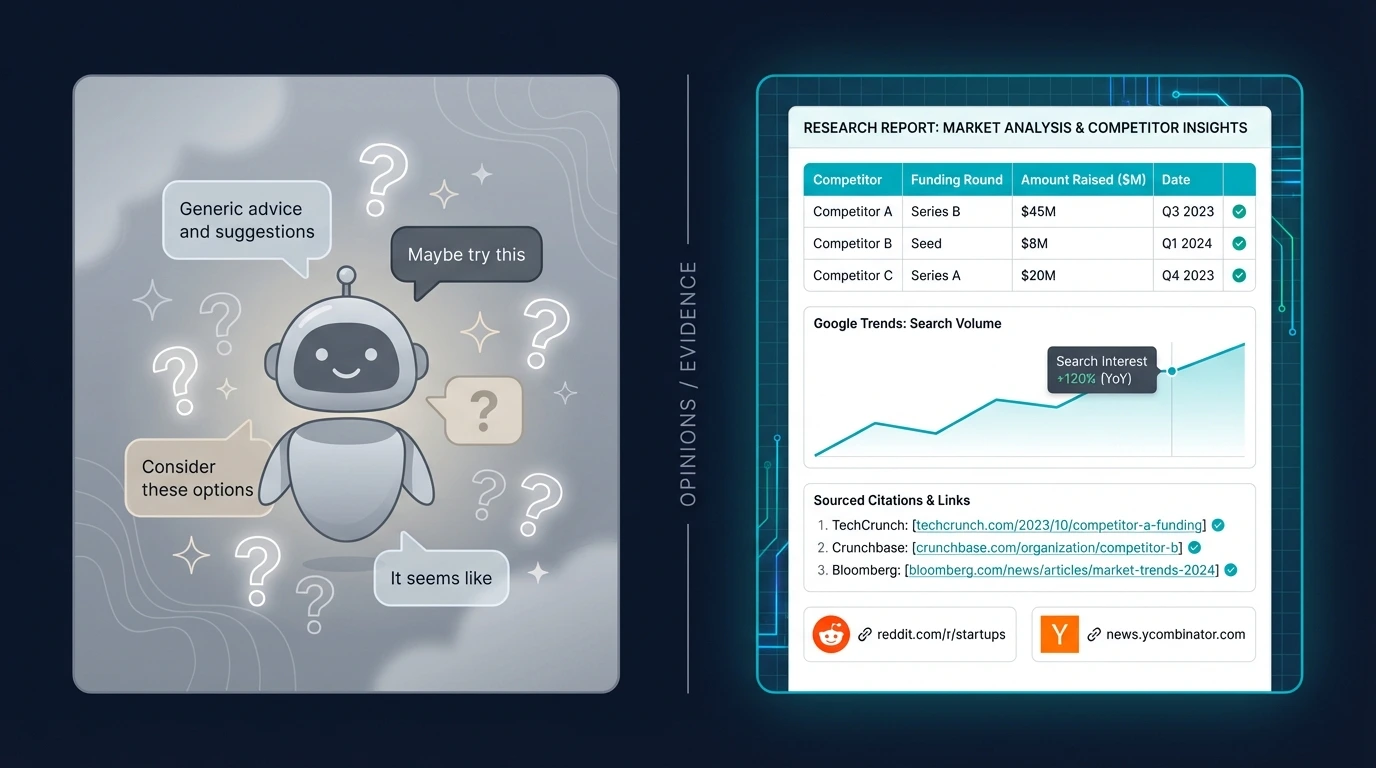
Find competitors (even tangential ones) and read 1-3 star reviews. These are gold. Users tell you exactly what's broken about existing solutions.
Google Trends
Is search interest for your problem growing, flat, or dying? A flat line isn't death, but a downward slope is a red flag.
Quora and Stack Exchange
For B2B or technical products, these platforms surface real questions from real users. Sort by recent to see if the problem is still active.
Twitter/X Search
Search for "[problem] is broken" or "[solution category] sucks." Unfiltered complaints from real users.
What You're Looking For:
- •Volume: Are lots of people talking about this, or just 3?
- •Intensity: Are they mildly annoyed or genuinely frustrated?
- •Recency: Is this an active problem or a 2019 thread?
- •Spend signals: Are they asking for paid solutions or expecting free?
Red Flags:
- ⚠You can't find anyone complaining about this problem
- ⚠All discussion is 2+ years old
- ⚠People discuss it but seem fine with existing solutions
- ⚠The only complaints are about price (means the market is commoditized)
→ Action Step
Spend 60 minutes searching. Screenshot 10+ examples of real people describing your problem in their own words. If you can't find 10, your problem might not be painful enough.
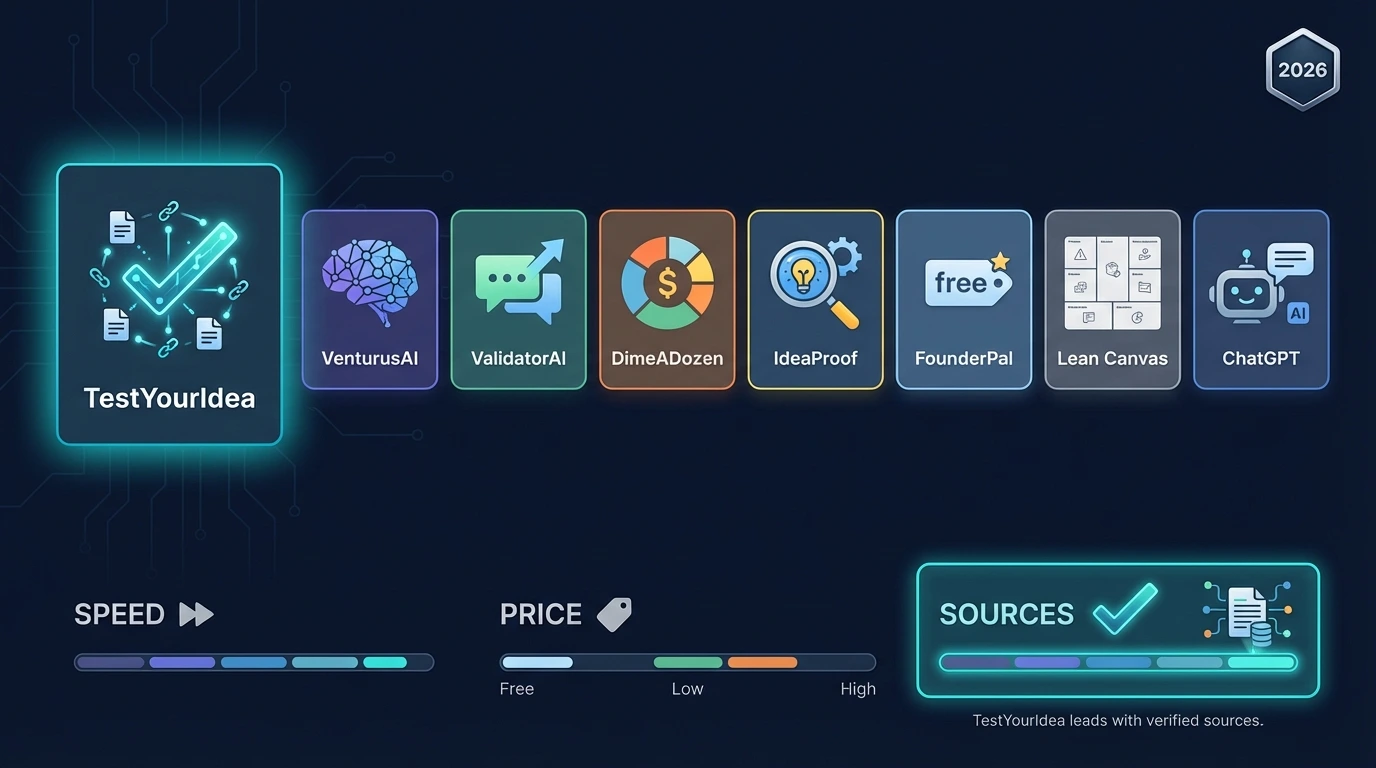
Short on time? Test Your Idea scans Reddit, Indie Hackers, Product Hunt, and 5 other platforms automatically.
Step 3: Map the Competitive Landscape (Properly)
"I don't have competitors" is the most dangerous sentence in startups.
You always have competitors. They might be direct competitors (same solution, same audience), indirect competitors (different solution, same problem), or status quo competitors (spreadsheets, manual processes, doing nothing).
Most founders find 2-3 competitors and stop. The real number is usually 10-20+.
How to Find Competitors You're Missing:
- 1Google the problem, not the solution. Search "how to [solve problem]" not "[your product category] software."
- 2Check Product Hunt and G2 categories. Browse adjacent categories, not just the obvious one.
- 3Search Crunchbase and PitchBook for funded companies in your space. If there are 5+ companies with $10M+ raised, you're entering a dogfight.
- 4Ask in communities. Post "What do you use for [problem]?" in relevant Slack groups, Discord servers, or subreddits.
- 5Look at job postings. Companies hiring for roles related to your problem are building internal solutions—potential customers or competitors.
What to Document:
For each competitor, note: pricing model and price points, primary audience, key features, weaknesses (from reviews), and funding/traction if available.
The Real Question:
After mapping competitors, ask yourself: Why would someone choose me over the established player?
Valid Answers
- "I'm 10x cheaper for the same outcome"
- "I serve a niche they ignore"
- "I solve it in a fundamentally different way"
- "Their product is from 2015 and feels like it"
Invalid Answers
- "My UI will be better" (everyone says this)
- "I'll have more features" (feature wars are unwinnable)
- "I'm more passionate" (irrelevant to customers)
→ Action Step
Create a spreadsheet with 10+ competitors. If you can't find 10, you're not looking hard enough—or the market doesn't exist.
Step 4: Talk to Real Humans (The Right Way)
Online research tells you the problem exists. Customer conversations tell you if your solution fits.
Who to Talk To:
Not your friends. Not your network. Not people who will be "nice." You need strangers who match your target profile and have no reason to protect your feelings.
Where to find them: Reddit/Discord DMs, LinkedIn cold outreach, Twitter engagement, local meetups and Slack communities, Upwork/Fiverr (pay for 30-minute calls if needed).
How Many Conversations?
10
Minimum
20-30
Ideal
7-8
Pattern kicks in
What to Ask:
Don't pitch your idea. You're here to learn, not sell. Use the Mom Test framework (from Rob Fitzpatrick's book):
1. Ask about their life, not your idea.
"Walk me through the last time you dealt with [problem]. What did you try? What happened?"
2. Ask about specifics, not hypotheticals.
Bad: "Would you use an app that does X?"
Good: "Last month, how did you handle X? What did that cost you?"
3. Ask about money and time.
"How much time do you spend on this per week? Have you paid for solutions before? What would you pay to make this disappear?"
4. Shut up and listen.
Take notes verbatim. Follow-up with "Tell me more about that." Resist the urge to explain your solution.
Warning Signs vs. Green Lights:
⚠ Warning Signs
- They say "that's interesting" but can't describe their pain
- They've never tried to solve this problem
- They've tried free solutions and are satisfied
- They can't articulate what they'd pay
- You have to explain why they should care
✓ Green Lights
- They get visibly frustrated describing the problem
- They've tried multiple solutions and hate all of them
- They quote specific time/money costs unprompted
- They ask when your product launches
- They offer to pay for early access
→ Action Step
Book 10 conversations this week. Use Calendly. Offer a $20 Amazon gift card if needed. No excuses.
Step 5: Stress-Test with Frameworks VCs Actually Use
Gut feelings lie. Frameworks don't. Before you go further, run your idea through the same filters investors use to evaluate thousands of pitches.
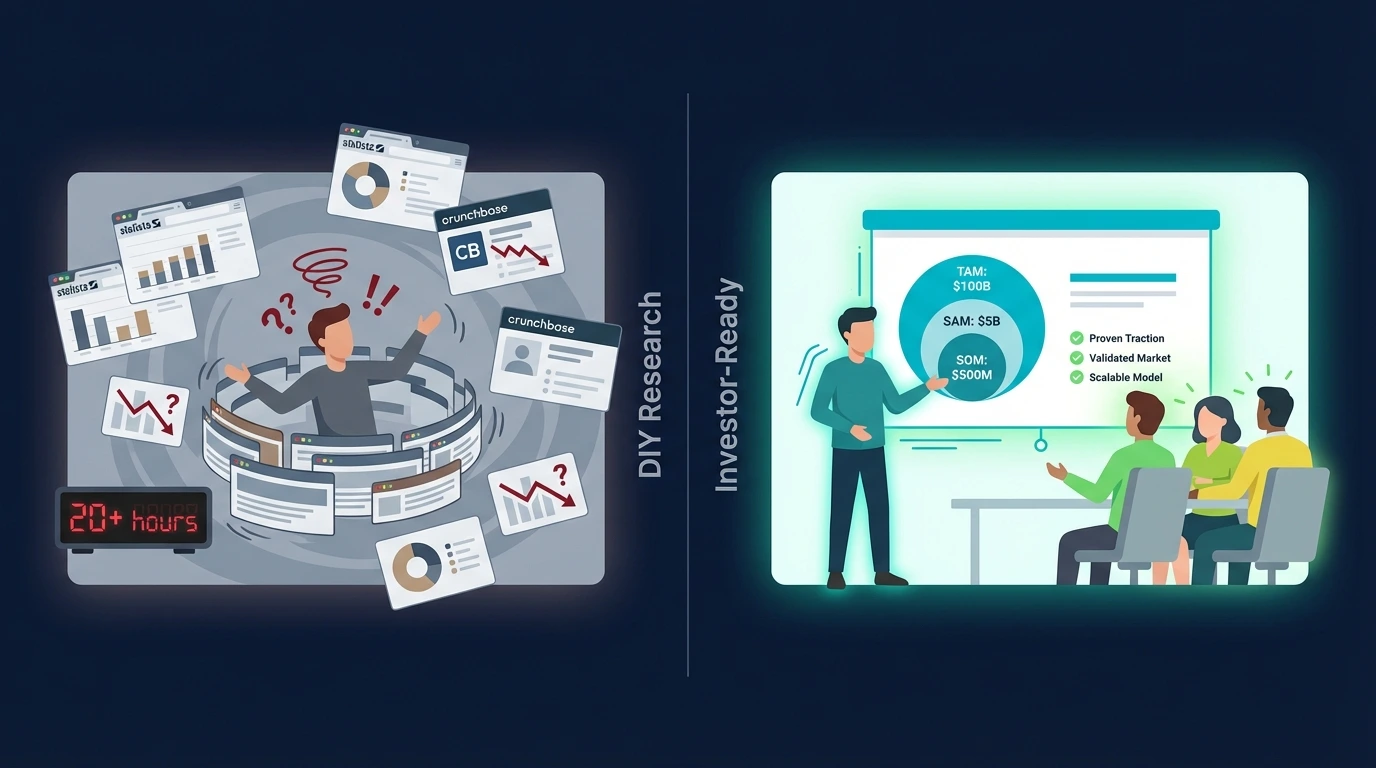
Framework 1: TAM/SAM/SOM (Market Sizing)
- •TAM (Total Addressable Market): Everyone who could theoretically buy this
- •SAM (Serviceable Addressable Market): The segment you can actually reach
- •SOM (Serviceable Obtainable Market): What you can realistically capture in 2-3 years
A $100B TAM means nothing if your SAM is $5M. Be honest about who you can actually reach.
Red flag: Your SOM is under $1M. That's a lifestyle business at best.
Framework 2: Unit Economics
Before you build, estimate your Customer Acquisition Cost (CAC), Lifetime Value (LTV), and LTV:CAC Ratio (should be at least 3:1).
If paid ads cost $50/click in your space and your product is $10/month, the math doesn't work.
Framework 3: Porter's Five Forces (Defensibility)
- →Threat of new entrants: How easy is it to copy you?
- →Bargaining power of suppliers: Are you dependent on one API/platform?
- →Bargaining power of buyers: Can customers easily switch?
- →Threat of substitutes: What else solves this problem?
- →Industry rivalry: How bloody is the competition?
If you score poorly on 3+ forces, you're building a business that's easy to kill.
Framework 4: The Timing Question
Why now? What changed that makes this the right moment?
Valid answers: new technology enables something previously impossible, regulatory change created demand, behavioral shift (remote work, AI adoption), or incumbent is dying/distracted.
"I just thought of it" isn't a timing thesis.
→ Action Step
Score your idea on each framework. Be brutal. If you wouldn't invest in this company, why would you spend 2 years of your life on it?
The Validation Verdict: Go or No-Go?
After completing these five steps, you'll have a specific problem statement, evidence the problem exists, a map of 10+ competitors, 10+ customer conversations with real insights, and framework scores showing market viability.
Now make the call:
✓ GO Signals
- Problem is urgent and frequent
- Customers actively spending on solutions
- You have a defensible angle
- Unit economics pencil out
- Clear "why now" thesis
✗ NO-GO Signals
- Can't find evidence of problem online
- Competitors solved it well enough
- Customers won't pay (or pay enough)
- Market too small or shrinking
- No clear differentiation
A "no-go" isn't failure. It's intelligence. You just saved yourself months of building something nobody wants.
What Comes Next
Validation doesn't end here. It continues as you build.
But if you've done the work above, you're no longer guessing. You have data. You have conviction backed by evidence. That puts you ahead of 90% of founders who skip straight to building.
Using AI tools like Cursor, Replit, or Claude to build? Check out our guide on validation for vibecoders — a faster 30-minute process designed for the AI coding era.
The 42% who fail from no market need? They skipped these steps. They trusted their gut. They built first and asked questions later.
Don't be them.
Want to run this process in 60 seconds?
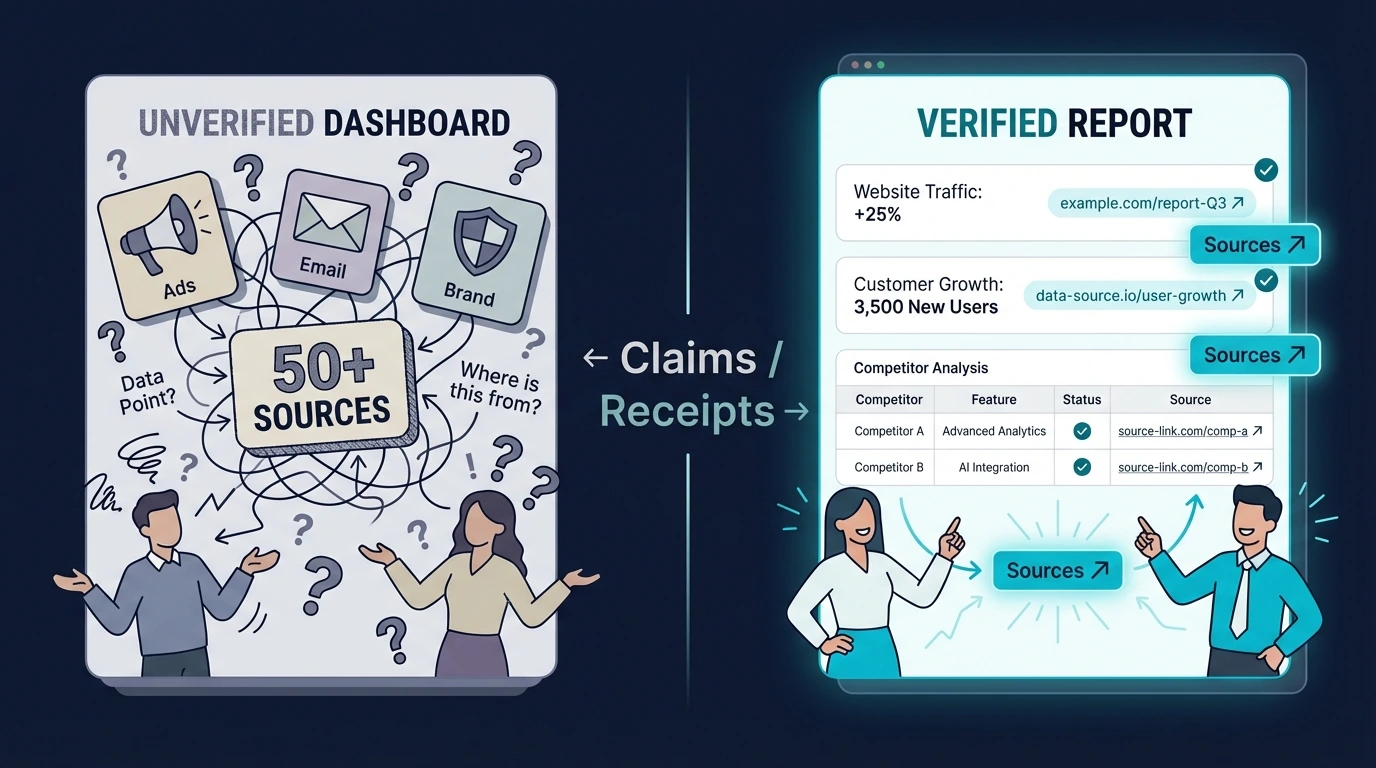
Test Your Idea analyzes your startup idea against live market data—competitors, demand signals, and risk factors—using the same frameworks VCs use.
Audit My Idea (Free)→Free audit. Takes 60 seconds.