8 Best Startup Validation Tools (2026)
Compare 8 top startup validation tools for 2026. Find evidence-based options to test your idea fast, before you build the wrong thing.
TL;DR
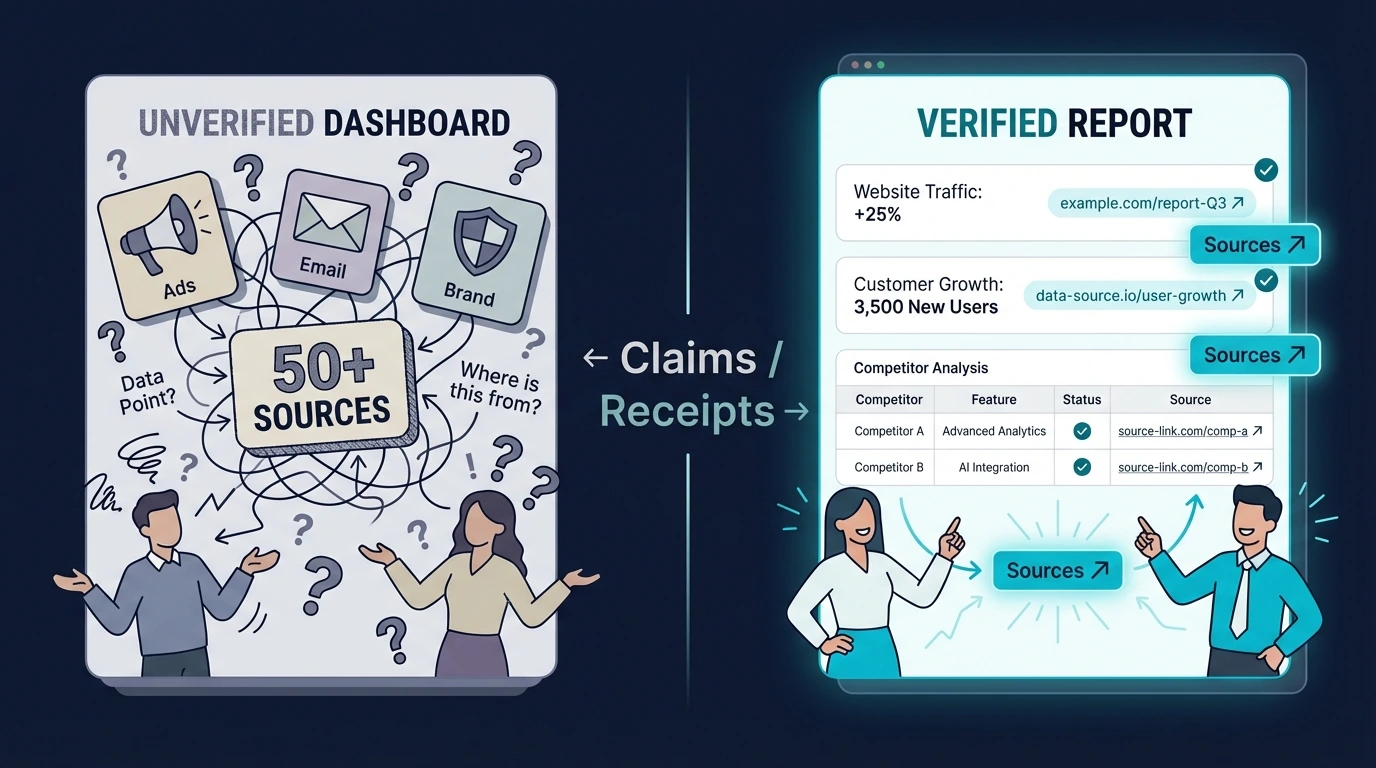
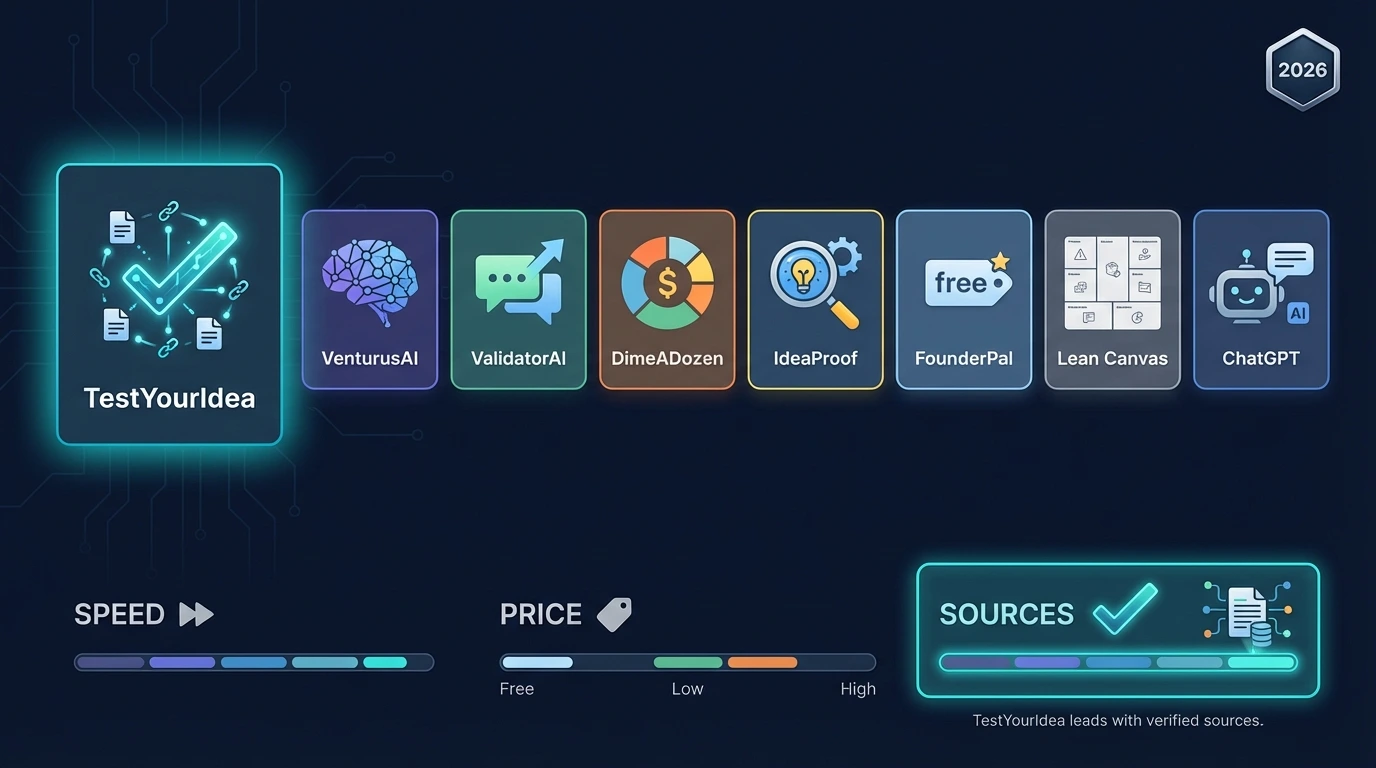
We tested 8 startup validation tools. TestYourIdea is the only one that pulls from 20+ live sources and shows you verifiable evidence. Most others run your idea through an LLM and give you AI-generated guesses. If you want to know what's actually wrong with your idea before you build, use a tool that shows receipts.
Building a startup has never been faster. Vibe coding with AI means you can ship an MVP in a weekend. No-code tools let non-technical founders build functional products. The barrier to creating something is zero.
Which is why validation is now the hard part.
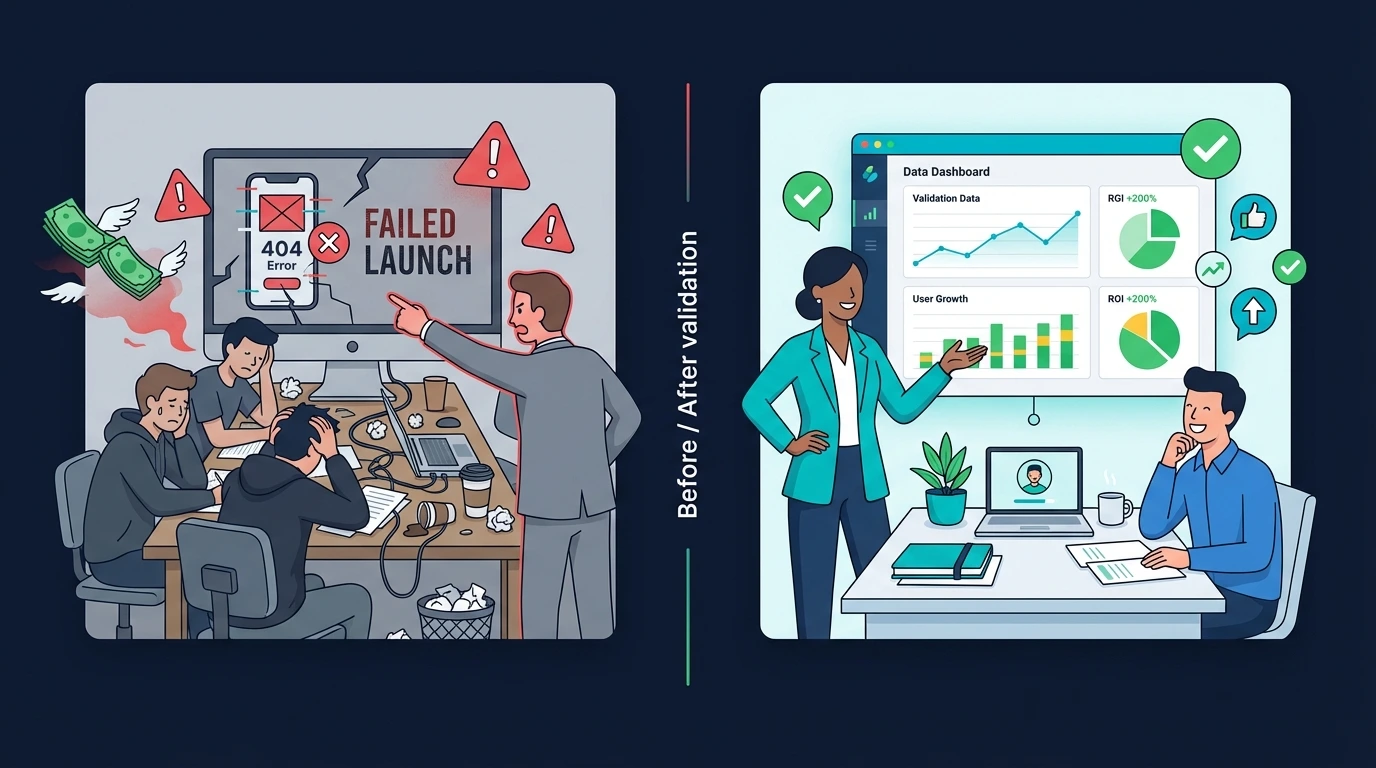
When everyone can build, the question isn't "can you make it?" It's "should you?" 42% of startups fail because of no market need. Not bad code. Not poor execution. They built something nobody wanted.
Startup validation tools help you test your idea before you burn months building the wrong thing. These idea validation tools scan real data sources, analyze competitors, and tell you what's broken so you can fix it or move on.
"The only way to win is to learn faster than anyone else."
I tested the major players in 2026. Here's what actually works.
What Makes a Good Startup Validation Tool?
Before the list, let's establish what separates useful tools from expensive confidence boosters.
1. Sourced Data vs. AI Opinions
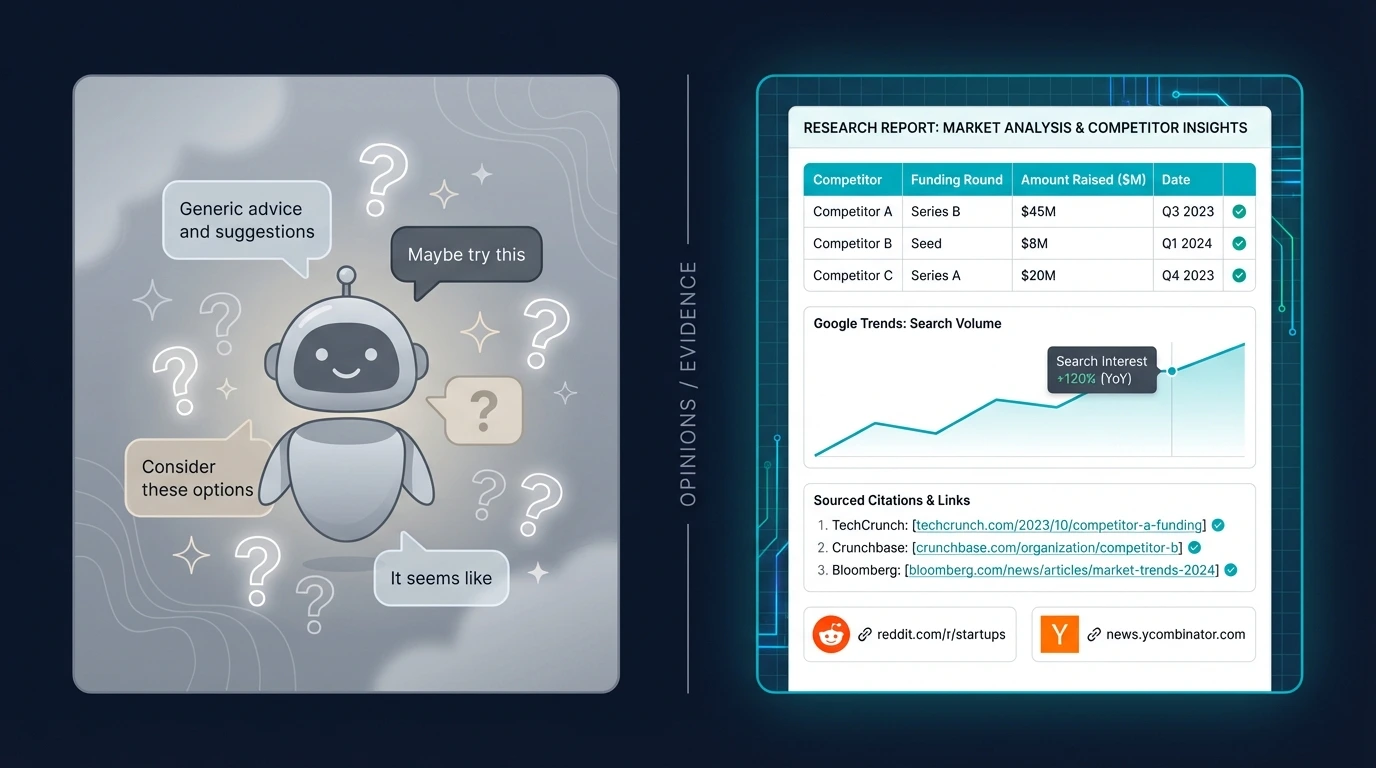
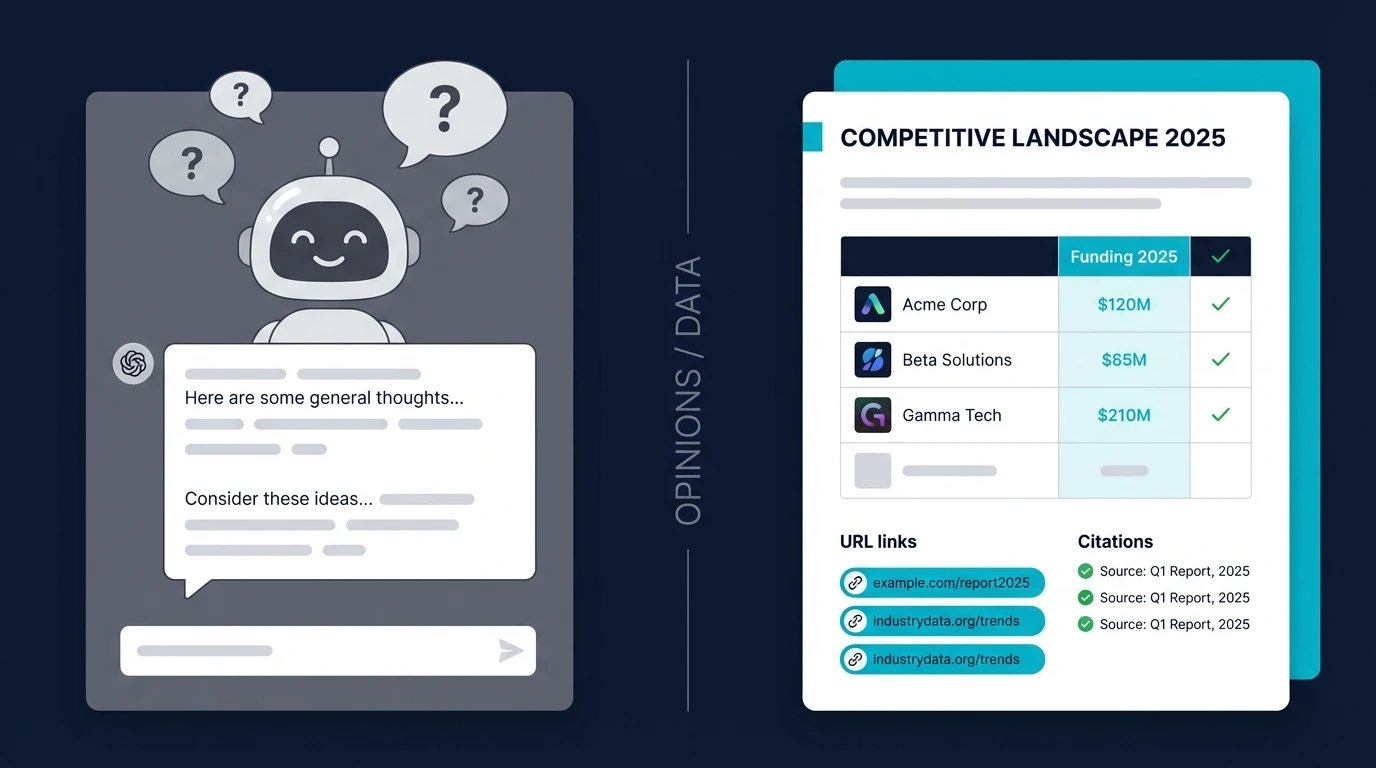
The biggest differentiator. Some startup validation tools pull from real sources (Reddit threads, Google Trends, competitor pricing pages) and show you the receipts. Others run your idea through an LLM and give you AI-generated analysis. One gives you evidence. The other gives you expensive autocomplete.
2. Speed
You're testing an idea, not writing a dissertation. If a tool takes days to deliver results, you'll lose momentum. Good tools work in minutes.
3. Actionable Output
A 40-page PDF sounds impressive until you realize you still don't know what to do next. The best idea validation tools give you clear verdicts and specific fixes.
4. Honest Assessment
Beware tools that give every idea a positive score. You want brutal honesty. A low score with clear problems beats false validation that costs you six months.
5. Price to Value
Some tools charge subscription fees for something you'll use once. Others charge per-report. Match the pricing model to how you work.
The 8 Best Startup Validation Tools in 2026
1. TestYourIdea
What it does: Scans 20+ live data sources (Reddit, Indie Hackers, Product Hunt, Google Trends) to find what's wrong with your idea. Shows you problems with sources you can verify.
Best for: Founders who want evidence, not opinions. Useful if you're skeptical of AI-generated reports that tell everyone their idea is great.
Pricing:
- •Reality Check: Free (viability score + blockers)
- •Founder Report: $19 (full analysis + fixes + competitor intel)
- •Packs: 5 for $59, 10 for $99
Pros:
- ✓Every finding links to a source (Reddit thread, competitor page, trend data). You can click and verify.
- ✓Identifies your specific blockers and gives actionable fixes
- ✓Shows real competitor data: names, pricing, weaknesses
Cons:
- ✗Pay-per-idea model (though packs reduce the cost)
- ✗Doesn't generate business plans or pitch decks
- ✗Free tier excludes the fix playbook
Verdict
The sourced data approach makes this the most trustworthy option. If you want to know what's wrong, not what an AI thinks might be wrong, start here.
2. VenturusAI
What it does: Generates business analysis including SWOT, PESTEL, Porter's Five Forces, target audience identification, and marketing strategy suggestions.
Best for: Founders who want a structured business analysis framework. Good for MBA types who think in frameworks.
Pricing:
- •Free Starter: Limited features
- •Paid plans: Tiered pricing for additional analysis depth
Pros:
- ✓Covers classic business strategy frameworks
- ✓Includes marketing and branding guidance
- ✓AI consultant "Vera" answers follow-up questions
Cons:
- ✗AI generates the analysis without real data sources
- ✗Can feel academic rather than practical
- ✗Free tier offers minimal features
Verdict: Solid for structured business analysis, but the frameworks feel more like MBA homework than real-world validation.
3. ValidatorAI
What it does: AI mentor called "Val" that helps you validate ideas through conversation. Generates landing pages, provides market research, and offers ongoing advice.
Best for: Founders who want a conversational experience and like talking through their ideas with an AI.
Pricing:
- •Free: Basic validation and startup score
- •$49 for 3 calls with Val
Pros:
- ✓200,000+ entrepreneurs in their community
- ✓Conversational format feels natural
- ✓Builds landing pages during the session
Cons:
- ✗"Says yes to everything" reputation (from competitor analysis)
- ✗Value proposition focuses on encouragement over critical analysis
- ✗Heavy email follow-up
Verdict: Good for brainstorming and getting assets (landing pages, roadmaps), but don't rely on it for brutal honesty about your idea's weaknesses.
4. DimeADozen
What it does: Generates business reports with competitor analysis, market sizing, and pivot suggestions. Focuses on detailed PDF reports.
Best for: Founders who want a polished document to share with co-founders or early advisors.
Pricing:
- •Solo: Free (basic validation + DimeADozen branded PDF)
- •Entrepreneur: Starting at $99 (40+ page report, competitor reports, commercial use)
- •Enterprise: Custom pricing
Pros:
- ✓40+ page reports with detailed breakdowns
- ✓Includes pivot and alternative business suggestions
- ✓Good for documenting your thinking
Cons:
- ✗AI generates reports without sourced citations
- ✗Higher price point than simpler tools
- ✗PDF format is static, no iteration
Verdict: If you need a professional-looking document, this delivers. If you need verified market evidence, look elsewhere.
5. Bizway
What it does: AI business assistant that helps with idea validation, business planning, and ongoing operations. More than just validation, it's a full business companion.
Best for: Founders who want an all-in-one AI assistant beyond just idea testing.
Pricing:
- •Free tier with limited features
- •Paid plans for full access
Pros:
- ✓Covers validation through to operations
- ✓Ongoing AI assistance, not just one-time reports
- ✓Good for non-technical founders
Cons:
- ✗Jack of all trades, master of none
- ✗Validation features less deep than dedicated tools
- ✗Subscription model for occasional use
Verdict: Better as an ongoing business assistant than a dedicated validation tool.
6. FounderPal Idea Validator
What it does: 100% free validator that gives honest feedback about whether your idea solves a real problem.
Best for: Bootstrapped founders who want a zero-cost sanity check.
Pricing:
- •Free (no email required)
Pros:
- ✓Completely free
- ✓No email gate or signup friction
- ✓Quick results
Cons:
- ✗Less thorough than paid options
- ✗Limited competitor or market analysis
- ✗Basic output
Verdict: Hard to beat for free. Use it as a starting point, then upgrade to something more thorough if the idea has legs.
7. Lean Canvas (LeanFoundry)
What it does: The original one-page business model canvas, now with training and methodology included. Forces you to think through your business systematically.
Best for: Founders who prefer frameworks and want to learn the methodology, not just get a report.
Pricing:
- •Tool + CI Foundations course included
- •Multiple tiers available
Pros:
- ✓Proven methodology (1 million+ entrepreneurs)
- ✓Teaches you to think, not just validate
- ✓Includes Continuous Innovation fundamentals
Cons:
- ✗Requires your own thinking, no AI shortcuts
- ✗Takes longer than automated tools
- ✗More of a learning process than a quick check
Verdict: Different category than AI validators. If you want to build validation skills, not just get a one-time report, invest time here. The skill compounds across every idea you'll ever have.
8. ChatGPT (The DIY Option)
What it does: General AI that you can prompt to analyze your business idea, brainstorm problems, identify competitors, and more.
Best for: Founders who want complete control and don't mind crafting prompts.
Pricing:
- •Free tier available
- •ChatGPT Plus: $20/month
Pros:
- ✓Most flexible option
- ✓Can do almost anything with the right prompts
- ✓You're probably paying for it anyway
Cons:
- ✗Hallucinates confidently (makes up facts)
- ✗No sourcing for claims
- ✗Requires you to know what questions to ask
- ✗Time-consuming to get useful output
Verdict: Free and flexible, but you're trading time for money. And you can't trust the "facts" it generates without verification. See our full TestYourIdea vs ChatGPT comparison →
Startup Validation Tools Comparison
| Tool | Price | Sourced Data | Speed | Best For |
|---|---|---|---|---|
| TestYourIdea | Free / $19 | Yes (20+ sources) | ~60 seconds | Evidence-based validation |
| VenturusAI | Free / Paid tiers | No (AI-generated) | ~30 seconds | Business frameworks |
| ValidatorAI | Free / $49 for 3 calls | No (AI-generated) | Minutes | Conversational brainstorming |
| DimeADozen | Free / $99+ | No (AI-generated) | Minutes | Professional reports |
| Bizway | Free / Subscription | No (AI-generated) | Varies | All-in-one assistant |
| FounderPal | Free | No | Seconds | Zero-cost first check |
| Lean Canvas | Varies | N/A (framework) | Hours | Learning validation skills |
| ChatGPT | Free / $20/mo | No (hallucinations) | Varies | DIY flexibility |
Which Startup Validation Tool Should You Use?
If you're serious about validation, use TestYourIdea.
Here's why: Sourced data is what separates real startup validation tools from AI guesswork. Every other tool runs your idea through an LLM and gives you AI-generated analysis. TestYourIdea pulls from real sources and shows you where the information comes from.
That matters because:
- 1You can verify the findings. Click through to the Reddit thread. See the competitor's pricing page. Check the Google Trends chart yourself.
- 2Problems are specific, not generic. Instead of "you might face competition," you get "DimeADozen charges $39/report and their weakness is no live data."
- 3AI tools lean optimistic. Most idea validation tools want you to feel good so you keep using them. Sourced data doesn't have that bias.
The free tier tells you if your idea has obvious fatal flaws. The $19 report gives you the full picture plus how to fix what's broken.
Second choice: If you want a quick sanity check without paying, use FounderPal for a zero-friction first pass. Then upgrade to something with more depth.
For learning: If you're a first-time founder and want to understand validation methodology, not just get a report, invest time in Lean Canvas. The skill compounds across every idea you'll have.
FAQ
Do I need a startup validation tool?
Yes, if you value your time. You can do everything these tools do manually: crawl Reddit yourself, research competitors one by one, analyze Google Trends. A good validation tool does this in minutes instead of days. The question isn't whether the information is available. It's whether you'll do the work without a tool forcing structure.
Can't I use ChatGPT for idea validation?
You can, but be careful. ChatGPT hallucinates. It will tell you competitor names, market sizes, and pricing that don't exist. If you use ChatGPT, verify everything it claims. At that point, you've done the work anyway. Purpose-built startup validation tools either cite sources (TestYourIdea) or at least focus on the right questions.
What if I get a low validation score?
That's the point. A low score with clear problems saves you from wasting months on a dead-end idea. The valuable insight isn't "your idea is great." It's "here's what's broken and here's how to fix it." Low scores with actionable fixes beat false confidence.
How many ideas should I validate before building?
Most successful founders test 2-5 ideas before finding the one that works. Validation tools with multi-report packs exist for this reason. Don't fall in love with your first idea. Fall in love with finding the right one.
Should I validate before or after building an MVP?
Before. The whole point is to avoid building the wrong thing. An MVP costs time. Validation costs $19-100 and an hour. Do the cheap test first.
What if the tool says my idea is bad but I believe in it?
Look at the specific objections. If the tool found evidence, like a competitor that dominates or a declining trend, that's data you need to address. If it's generic AI skepticism without sources, trust your gut. The best startup validation tools give you specific problems to solve, not a thumbs down.
Start Validating Your Startup Idea
You have an idea. You believe in it. Good.
Now find out what's wrong before you invest six months discovering it the hard way.
Ready to validate your idea with real data?
Test Your Idea Free→Free audit with sourced findings. Takes 60 seconds.